
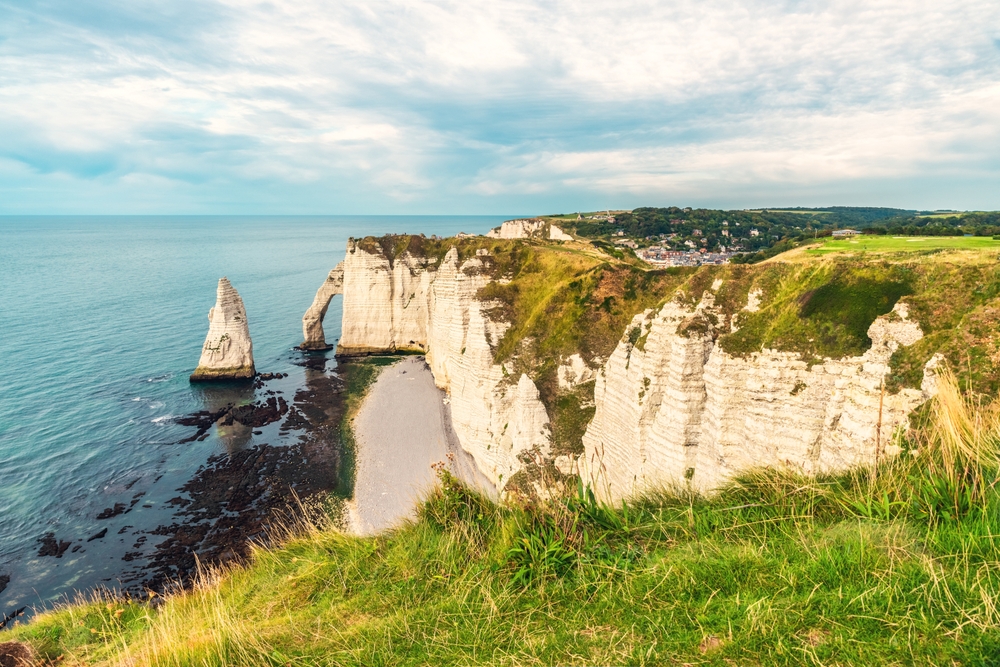
When you stand on the cliffs of Normandy, with the salty Atlantic wind on your face, it’s impossible not to feel the gravity of Normandy WWII history. These rugged cliffs and wide, sandy beaches are breathtaking on their own. However, they are also hallowed ground. On June 6, 1944, D-Day unfolded here; an operation that changed the course of World War II and, ultimately, the fate of Europe.
Today, Normandy is both a place of remembrance and renewal. Specifically, it is a region where solemn memorials stand alongside bustling villages, cider orchards, and coastal beauty. For travelers, it offers a rare blend of World War II history tours, cultural experiences, and natural landscapes. Therefore, let’s dive into both the past and present, so you can better appreciate why Normandy belongs on your travel list.

Operation Overlord: The D-Day Invasion
By 1944, Nazi Germany had occupied France for four years. Hitler’s “Atlantic Wall” — a vast network of fortifications, bunkers, and minefields — stretched from Norway to Spain, meant to repel any Allied assault. But the Allies had been planning for years, and they chose Normandy as the decisive point of attack.
On the morning of June 6, 1944, the largest amphibious invasion in history began. Over 156,000 troops from the United States, United Kingdom, Canada, and other Allied nations crossed the English Channel in 5,000 landing craft, supported by nearly 7,000 ships and 11,000 aircraft.
The Normandy coast was divided into five sectors:
- Utah Beach (U.S.) – The westernmost landing zone, relatively lightly defended compared to others. American forces secured it with fewer casualties than expected.
- Omaha Beach (U.S.) – Perhaps the bloodiest of all, Omaha was heavily fortified with cliffs, machine guns, and bunkers. American troops faced devastating losses.
- Gold Beach (U.K.) – British forces stormed this central sector, tasked with capturing Arromanches to build the Mulberry harbor.
- Juno Beach (Canada) – Canadian troops fought fiercely against strong German resistance, eventually pushing further inland than any other unit.
- Sword Beach (U.K.) – The eastern flank, targeted by British troops with support from Free French forces.
Certainly! Here’s a revised version of your text with smoother transitions:
“Above all, the success of D-Day hinged on surprise, bravery, and sacrifice. First, the Allies paid dearly; by the end of June 6, there were over 10,000 Allied casualties, including approximately 4,400 confirmed dead. Despite these heavy losses, the beachhead held. As a result, within weeks, Normandy became the gateway to liberating France—and eventually all of Western Europe.”
Let me know if you’d like additional transitions or further modifications.
Pointe du Hoc: The Cliffs of Courage
Of all Normandy’s landmarks, few capture the drama of D-Day like Pointe du Hoc. This dramatic cliff, which rises nearly 100 feet above the sea, was a key German stronghold. As a result, U.S. Army Rangers were tasked with scaling the sheer rock face under heavy fire to destroy enemy artillery that threatened Omaha and Utah Beaches.
Armed with ropes, grappling hooks, and ladders, the Rangers climbed while under attack from above. Despite the intense assault, fewer than half of the 225 men were able to continue fighting afterward. Today, the site is preserved with bomb craters, shattered bunkers, and memorials — serving as a haunting reminder of what was endured.
For visitors, Pointe du Hoc is one of the most powerful WWII sites in France. Standing on those cliffs, the vastness of the Channel below, you can almost feel the Rangers’ determination.

Key WWII Sites in Normandy
For travelers interested in Normandy WWII history tours, here are must-see locations:
1. Normandy American Cemetery (Colleville-sur-Mer)
- Located above Omaha Beach, this cemetery honors nearly 9,400 American soldiers. Moreover, the symmetry of white crosses and Stars of David is both breathtaking and sobering. Additionally, the visitor center provides historical context through personal stories of those who fought.
- SEO tip: “Visiting the Normandy American Cemetery near Omaha Beach” is a highly searched travel phrase.
2. Omaha Beach
- Walking along Omaha Beach today, it’s hard to imagine the chaos of D-Day. However, sunbathers, children, and kite surfers now share the sand where young men once charged through enemy fire. Additionally, several memorials and small museums line the coast.
3. Utah Beach & the Utah Beach Museum
- The Utah Beach Museum is built on the very sand where American troops landed. Additionally, exhibits include a restored B-26 bomber and various artifacts from the invasion. While Utah Beach tends to be less crowded than Omaha Beach, it is just as significant historically.
4. Arromanches-les-Bains & the Mulberry Harbors
- The temporary harbors built here were indeed an engineering marvel. As a result, they allowed the Allies to unload tons of supplies despite lacking a natural port. Furthermore, you can still see the massive concrete caissons out at sea.
5. Pegasus Bridge (Bénouville)
- Captured by British paratroopers in the early hours of D-Day, Pegasus Bridge was vital in securing the eastern flank. Furthermore, the nearby museum includes the original bridge and the story of Major John Howard’s men.
6. Bayeux
- Miraculously, and quite surprisingly, Bayeux was spared from wartime destruction, making it a charming base for visitors. It boasts the famous Bayeux Tapestry, which depicts the Norman Conquest of 1066, and also features a stunning Gothic cathedral.
7. Caen Memorial Museum
- One of Europe’s premier WWII museums, the museum not only covers the war itself but also delves into D-Day and the Cold War. Located in the city of Caen, which experienced intense fighting after D-Day, it offers a comprehensive view of this pivotal period in history.

Normandy Today: A Region Beyond World War II
While WWII history is central to Normandy’s identity, the region offers much more. Travelers often pair historical sites with cultural experiences like:
- Cider and Calvados tastings – Normandy is France’s cider country.
- Camembert and cheese tours – Taste this famous creamy cheese right at its source.
- Honfleur – A pastel-hued harbor town beloved by Impressionist painters.
- Mont-Saint-Michel – Technically just beyond the D-Day beaches, this medieval island abbey is one of France’s top attractions.
Balancing the solemn World War II history of Normandy with the Norman countryside charm makes for a meaningful trip.

Travel Tips for Visiting Normandy
- Best Time to Visit Normandy: May–June for commemorations and mild weather, or September for fewer crowds and warm seas.
- How to Get There: Trains from Paris to Bayeux or Caen take about 2 hours. Renting a car is essential for exploring beaches and rural sites.
- Where to Stay:
- Bayeux – Best central hub for history buffs.
- Caen – Larger city with museums and nightlife.
- Honfleur – Ideal if you want charm and coastal scenery.
- Tours: Consider guided Normandy D-Day tours. Many start in Bayeux or Paris and include Omaha Beach, Pointe du Hoc, and the American Cemetery.
Suggested 3-Day WWII Itinerary in Normandy
Day 1: Omaha Beach & American Sites
- Visit the Normandy American Cemetery
- Walk along Omaha Beach
- Explore Pointe du Hoc
- Evening in Bayeux
Day 2: British & Canadian Sectors
- Start at Pegasus Bridge
- Continue to Sword Beach & Juno Beach Centre
- Visit Gold Beach & Arromanches
- Dinner in Bayeux or Caen
Day 3: Museums & Reflection
- Morning at Caen Memorial Museum
- Afternoon in Bayeux (Cathedral + Tapestry)
- Evening cider tasting in the countryside
Optional add-on: Mont-Saint-Michel — about 1.5 hours from Bayeux.
Why Normandy Still Matters
The cliffs of Normandy and the beaches below are stunning landscapes. Moreover, they serve as powerful symbols of sacrifice, freedom, and resilience. Visiting Normandy today offers a deep connection to WWII history; you can stand where soldiers once fell, and hear children laughing in the surf. Additionally, strolling through Bayeux’s cobblestone streets feels untouched by war. Just miles from historic battlegrounds, you witness Normandy’s enduring WWII legacy. Indeed, echoes of WWII are everywhere in Normandy; yet, so is life—thriving and vibrant. Perhaps, the greatest legacy of D-Day is that from devastation, renewal can emerge.
If you are just as interested in history as I am check out these blog posts:
https://thetravelingowl.co/category/history/
Planning Your Normandy Journey
If you’re feeling inspired to walk in the footsteps of history, I’d love to help you craft a custom trip to Normandy. As a travel agent, I have access to exclusive D-Day tours with expert guides. I also offer private drivers who can take you from Paris straight to the beaches. Plus, I can provide some of the best rates on accommodations in Bayeux, Caen, or along the coast. Whether you want a solemn, history-focused itinerary, a mix of WWII sites and Normandy’s countryside charms, or a once-in-a-lifetime family trip, I can handle all the details. This way, you can simply soak in the experience.


Leave a Reply