
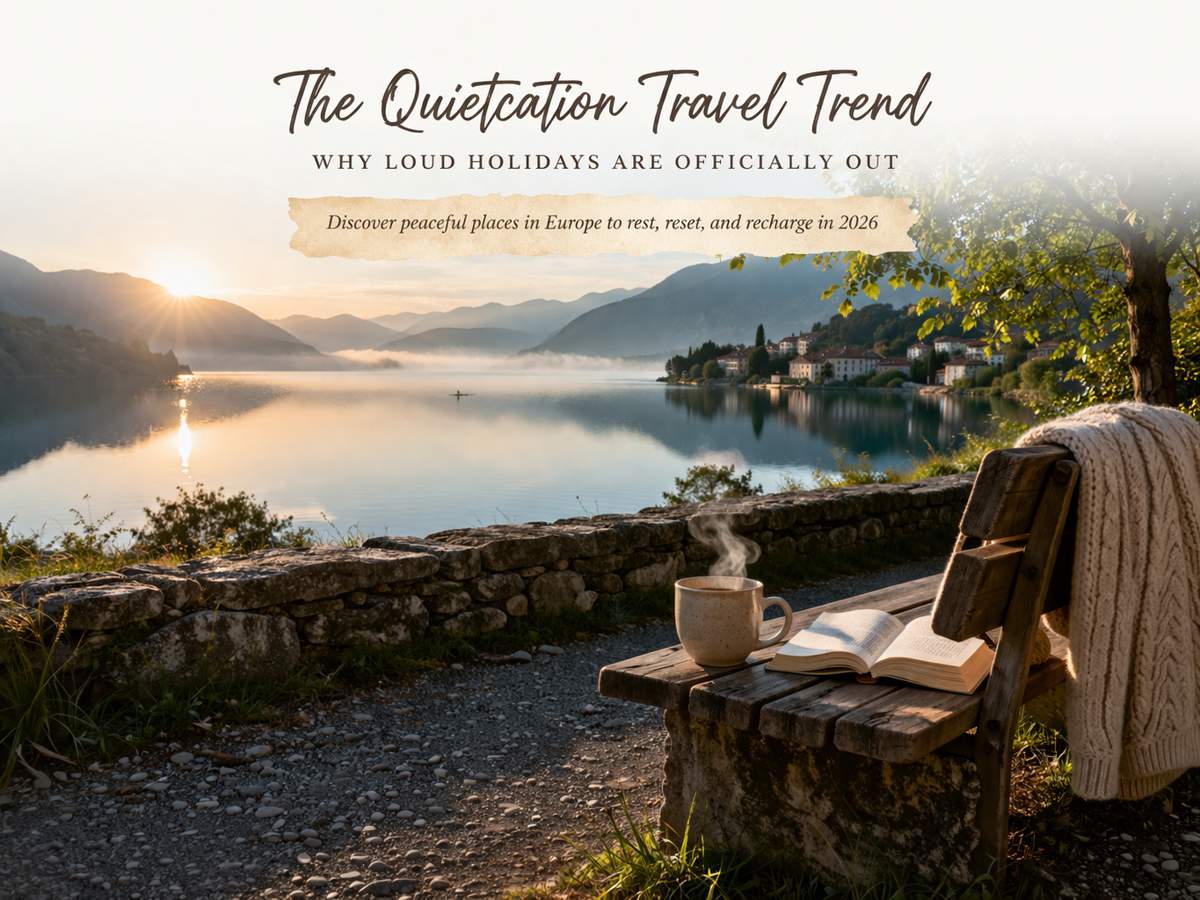
European travel is changing — and honestly, it’s about time. More people are beginning to discover the benefits of slow travel Europe as an alternative to rushing from city to city. If you’re interested in a deeper, more connected way to experience the continent, slow travel Europe might be just what you’re looking for.
The era of sprinting through five countries in seven days (while surviving on airport sandwiches and regret) is fading fast. In its place, slow travel in Europe is booming. Travelers in 2026 are prioritizing meaningful experiences, scenic journeys, and itineraries that don’t require a lie-down after every city.
If you’re planning a European trip and want something richer than the classic checklist tour, slow travel might be your perfect match. This guide covers the best scenic train routes in Europe, top river cruise experiences, and how to plan your own slow travel itinerary.
What Is Slow Travel — And Why Is It Trending in 2026?
Slow travel focuses on depth over distance. Instead of hopping between destinations, you:
- Stay longer in fewer places
- Use scenic transport (especially trains and boats)
- Prioritize culture, food, and nature
- Reduce travel stress and environmental impact
Search interest for terms like “slow travel Europe,” “scenic train routes Europe,” and “European river cruises”continues to climb, and it’s easy to see why.
Why travelers are embracing slow travel:
- ✈️ Airport fatigue is very real
- 🌍 Sustainability matters more than ever
- 🧳 Travelers want meaningful experiences
- 💶 Train travel can be surprisingly cost-effective
Bottom line: Europe was practically built for slow travel.
🚆 Best Scenic Train Routes in Europe for 2026
Rail travel is at the heart of the slow travel movement. Europe’s rail network is extensive, comfortable, and — in many cases — ridiculously scenic.
Below are the standout routes for 2026.
Glacier Express (Switzerland)


4
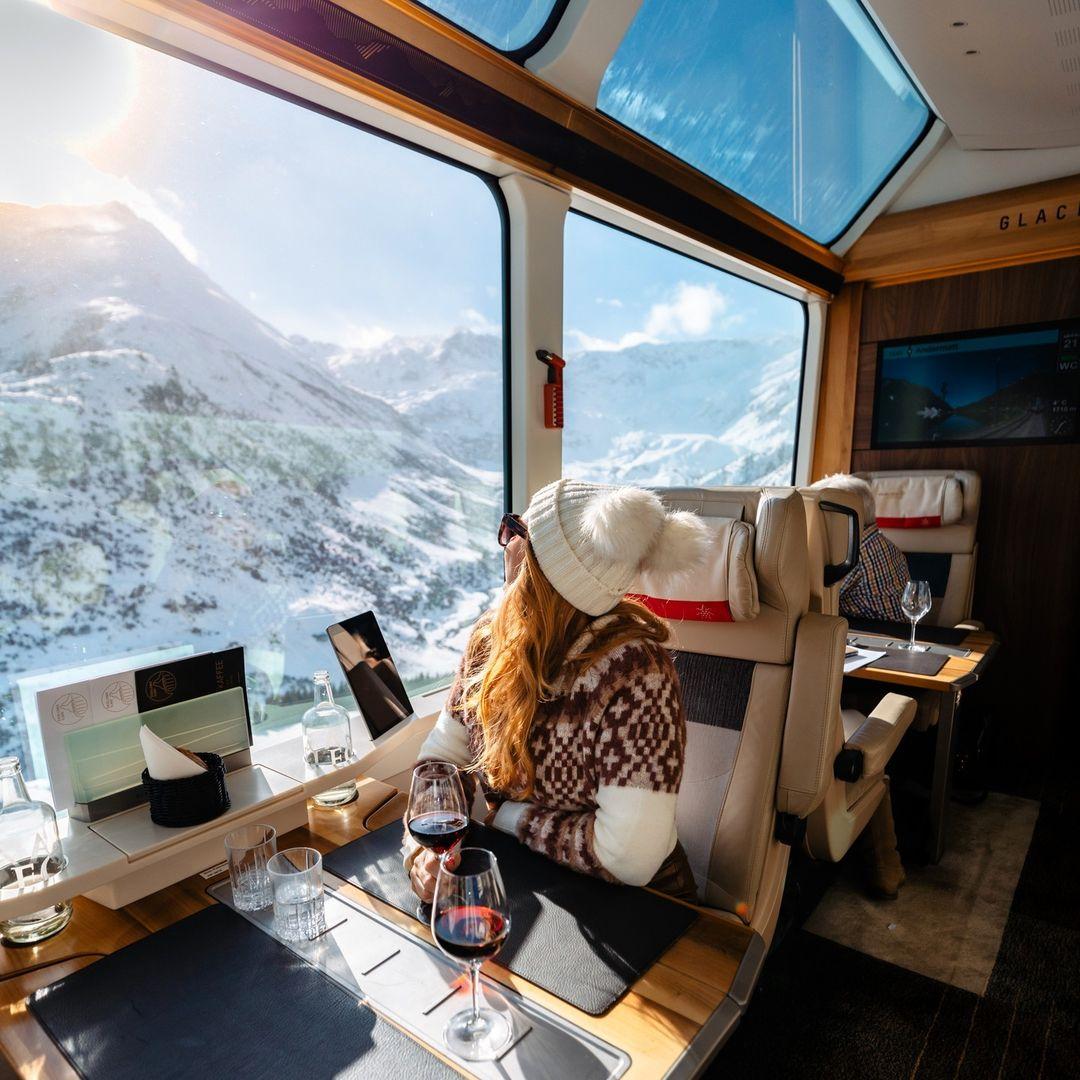
Often called the slowest express train in the world, the Glacier Express connects Zermatt and St. Moritz through the heart of the Swiss Alps.
Why it’s perfect for slow travel
- Panoramic windows the size of small conservatories
- Crosses 291 bridges and 91 tunnels
- Runs year-round
- No driving stress (your blood pressure says thank you)
Journey time: ~8 hours
Best for: Bucket-list scenery lovers
Pro tip: Book Excellence Class if your budget allows — it’s basically rail royalty.
West Highland Line (Scotland)


4
If dramatic landscapes are your thing, Scotland delivers in spades. The West Highland Line from Glasgow to Mallaig is frequently ranked among the most beautiful train journeys in the world.
Highlights
- Glenfinnan Viaduct (yes, the Harry Potter bridge)
- Remote Highland wilderness
- Sea views approaching Mallaig
- Cozy, uncrowded vibe compared to Alpine routes
Journey time: ~5 hours
Best for: UK-based travelers and first-time slow travelers
Best season: May–September
The Bernina Express (Switzerland → Italy)


4
This UNESCO-listed railway connects Chur (or St. Moritz) to Tirano in Italy and packs jaw-dropping scenery into just a few hours.
Why it’s trending for 2026
- Cross-border journey without airport chaos
- Dramatic alpine passes
- Stunning year-round
- Easier to fit into shorter trips
Journey time: ~4 hours
Best for: First European rail adventure
Insider tip: Sit on the right side heading south for the best views.
🚢 Best European River Cruise Routes for Slow Travel
If trains are slow travel’s backbone, river cruises are its luxury spa day.
River cruising in Europe is surging in popularity because it combines transport, accommodation, and sightseeing in one smooth package.
The Danube River Cruise (Germany → Hungary)


4
The Danube remains Europe’s most popular river cruise — and for good reason.
Typical stops
- Passau
- Vienna
- Bratislava
- Budapest
Why travelers love it
- High cultural density
- Walkable historic cities
- Excellent food and wine regions
- Smooth sailing for first-timers
Typical trip length: 7–10 days
Best for: First river cruise experience
The Rhine River Cruise (Switzerland → Netherlands)


4
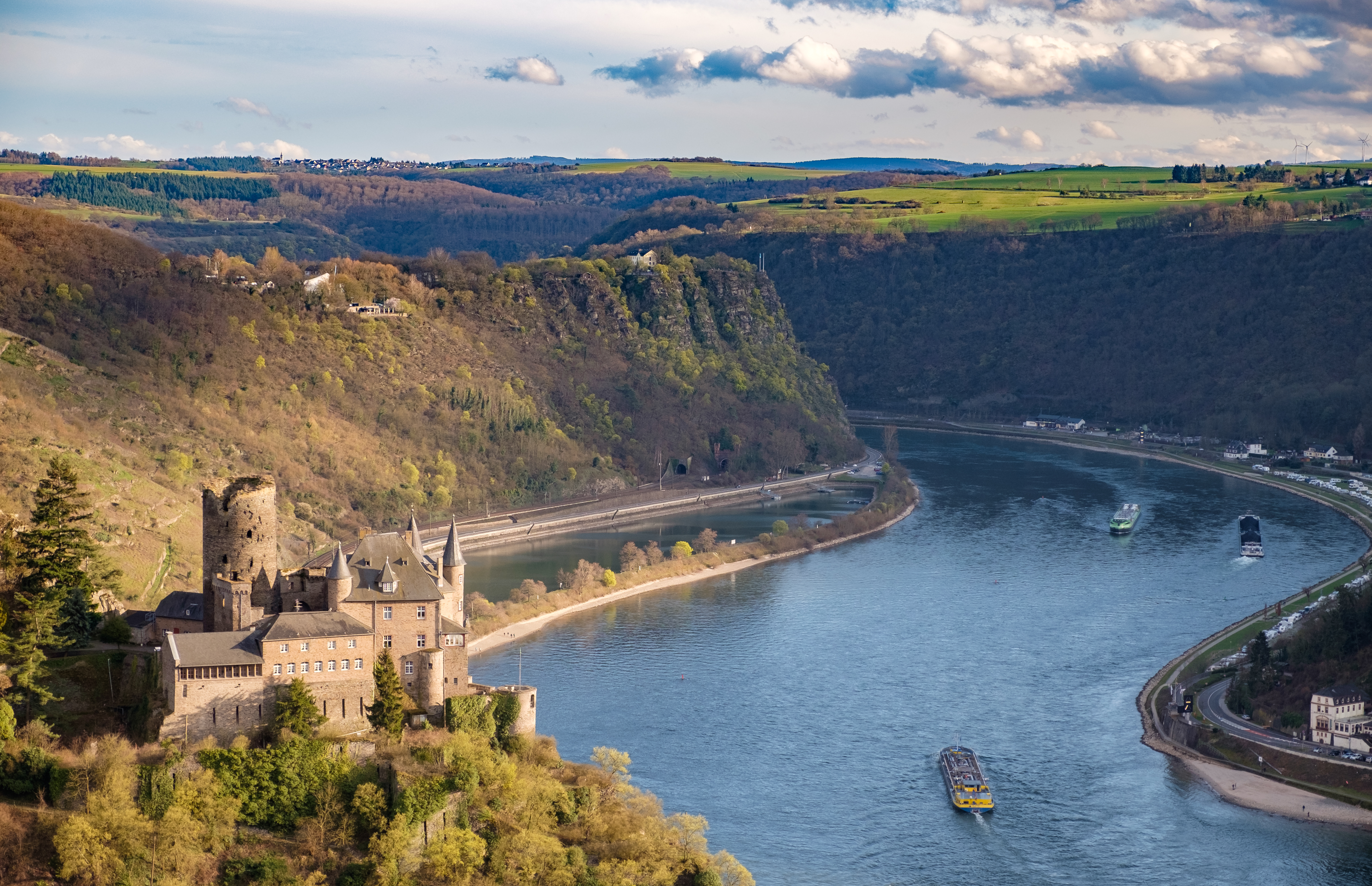
If your idea of Europe includes castles every five minutes, the Rhine delivers.
Standout features
- Rhine Gorge UNESCO section
- Fairytale German castles
- Easy logistics from major airports
- Strong value compared to ocean cruises
Typical trip length: 7–8 days
Best for: History lovers and first-time cruisers
Best season: April–October
How to Plan a Slow Travel Europe Itinerary
Slow travel sounds dreamy — but a little planning makes it magical instead of mildly chaotic.
Step 1: Choose Fewer Destinations
A good rule of thumb:
- 7 days → 1–2 bases
- 14 days → 2–3 bases
- 21 days → 3–4 bases
If your itinerary looks like a game of European bingo, scale it back.
Step 2: Build Around Scenic Transport
Start with your rail route or river cruise, then build your trip around it.
Example 10-day slow travel itinerary:
- Days 1–3: Zurich
- Day 4: Glacier Express
- Days 5–7: St. Moritz
- Days 8–10: Lake Como
Notice what’s missing? Airport queues. Bliss.
Step 3: Travel in Shoulder Season
For 2026, the sweet spots are:
- April–June
- September–October
You’ll get:
- Lower prices
- Fewer crowds
- Better availability
- Pleasant weather
Your future self will be grateful.
Step 4: Book Rail Passes Strategically
Popular options include:
- Eurail Global Pass
- Swiss Travel Pass
- Point-to-point advance tickets
Money-saving tip: Not every trip needs a rail pass — sometimes advance single tickets are cheaper.
Slow Travel Europe: Is It Worth It?
In a word: yes.
Slow travel isn’t just a trend — it’s a smarter, more enjoyable way to experience Europe. Instead of returning home needing another holiday, you actually come back refreshed (revolutionary concept).
Slow travel is ideal if you:
- Prefer meaningful experiences
- Love scenic journeys
- Want less travel stress
- Enjoy food, culture, and landscapes
- Are planning a longer Europe trip
Final Thoughts: Europe Was Made for Slow Travel
From panoramic Alpine trains to castle-lined rivers, Europe offers some of the best slow travel experiences in the world. And in 2026, travelers are finally catching on.
If you want a European trip that feels immersive instead of rushed, start with the rail lines and river routes above. Your itinerary — and your sanity — will thank you.
✅ Want help planning your own slow travel Europe itinerary?
I can create:
- Custom rail routes from the UK
- Budget vs luxury slow travel plans
- Done-for-you European itineraries
- Pinterest-ready graphics for this post
Just say the word and we’ll map your next adventure. 🦉✈️
For more train related travel inspiration please check out this blog post: https://thetravelingowl.co/2025/08/22/how-to-travel-europe-by-train-2025-guide/
Leave a Reply